Contents Home Performance IV Therapy: Benefits, Safety, and What to...
Read More

Reviewer | 27th April | Read time – 10 mins
Every drug you swallow, every capsule, every supplement — before any of it reaches your cells, it has to survive the gut. The stomach acid, the intestinal wall, the liver’s first-pass metabolism: each stage filters, degrades, or transforms what you took. By the time a water-soluble vitamin reaches your bloodstream from an oral dose, you might be absorbing a fraction of what the label promised — less if you have gut inflammation, digestive issues, or are simply over 40, when absorption efficiency quietly begins to decline.
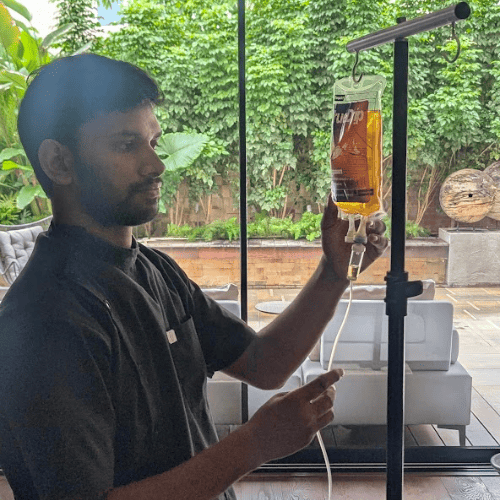
IV therapy bypasses that entire pathway. A solution of nutrients, fluids, or therapeutic compounds goes directly into the vein — straight to circulation, delivered at 100% bioavailability, available to tissues within minutes. It’s the same principle hospitals have used for a century to deliver fluids to dehydrated patients, antibiotics to those too ill to swallow, and nutrition to people who cannot absorb food. Wellness IV therapy applies the same delivery mechanism to nutrients that have well-documented biological roles but limited oral absorption.
This article covers what IV therapy is and how it works mechanically, why the delivery route matters pharmacologically, what types of IV therapy exist and what each targets, what to expect in a session, what the real risks are and how to assess whether a clinic is managing them properly, what it costs in India, and the specific case for IV therapy in Hyderabad.
IV therapy — intravenous therapy — is the administration of a liquid solution directly into a vein through a small catheter, usually placed in the forearm. The solution bypasses the digestive system entirely and enters systemic circulation immediately. From there, it distributes to organs and tissues within minutes, governed by the same pharmacokinetic principles as any intravenous drug.
The core concept is bioavailability — the proportion of a substance that reaches the bloodstream in an active form. Oral bioavailability varies enormously by substance, formulation, gut health, and individual metabolism. Intravenous bioavailability, by definition, is 100%. There is no absorption barrier, no first-pass hepatic metabolism, no gut-transporter saturation point. What goes in the bag reaches the blood. [1] Pharmacokinetic and mechanistic studies support plausible physiological benefits across antioxidant, immune, and metabolic pathways that oral delivery cannot reliably replicate. [5]
The mechanism is simple to describe but requires careful execution. A cannula — a short, flexible plastic tube on a needle — is inserted into a peripheral vein. The needle is removed; the cannula stays. A drip line connects the cannula to a bag of solution, which flows by gravity or a controlled pump at a rate calibrated to the contents and the patient. Too fast, and some nutrients produce systemic reactions — flushing, nausea, a sensation of heat — because the body’s metabolic processing can’t keep up. At the correct rate, these effects don’t occur.
IV therapy is not a single treatment — it is a delivery mechanism applied to different therapeutic goals. The major categories used in wellness and integrative medicine settings are distinct in their ingredients, their evidence base, and who they’re best suited for.
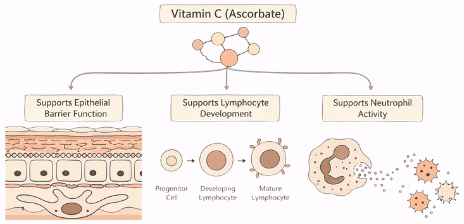
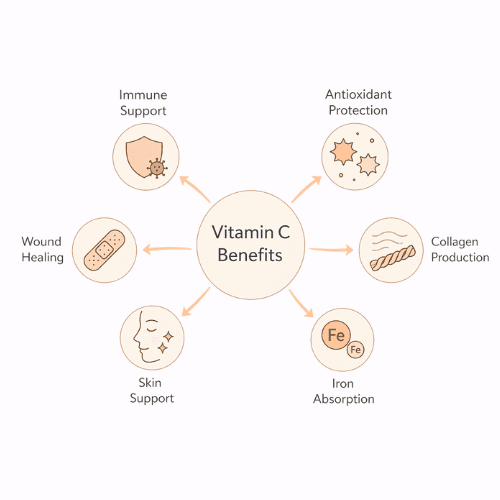
The most extensively researched IV nutrient therapy. At wellness doses (7.5–25g), vitamin C IV supports immune function, collagen synthesis, and adrenal recovery. At pharmacological doses (25–100g), it is used as integrative support in cancer care, exploiting the pro-oxidant mechanism that high-concentration ascorbate triggers in tumour microenvironments. The pharmacokinetic case for IV over oral is among the clearest of any nutrient.
Glutathione is the body’s master antioxidant — a tripeptide produced in the liver that neutralises reactive oxygen species, recycles other antioxidants, and supports phase II liver detoxification. It is almost entirely destroyed in the gut when taken orally, making IV delivery the only practical route to meaningfully raise systemic glutathione levels. Commonly used for skin brightening, liver support, and antioxidant loading. Read the full article: /iv-therapy/glutathione-iv-therapy/
NAD+ is a coenzyme central to mitochondrial energy production, DNA repair, and sirtuin activation. Levels fall roughly 50% between age 25 and 50, impairing cellular energy, circadian rhythm, and the body’s capacity to repair DNA damage. [9] A randomised pilot study found IV NAD+ raises plasma and tissue levels faster and more completely than oral precursors like NMN or NR [7], making it the preferred route for people with significant depletion — chronic fatigue, brain fog, addiction recovery, or documented biological ageing. Sessions run 2–4 hours due to the slower required infusion rate.
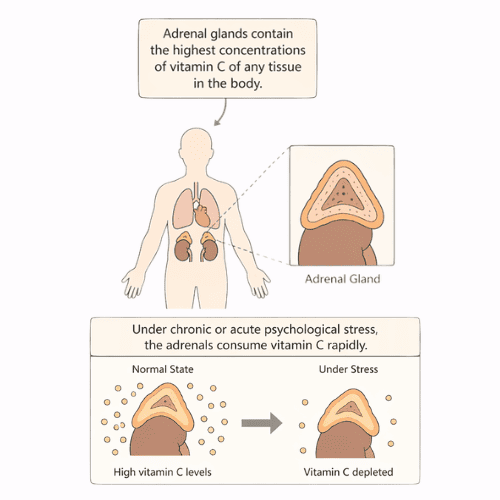
The original multi-nutrient IV protocol, developed by Dr. John Myers in the 1960s. A combination of magnesium, calcium, B vitamins (B1, B2, B5, B6, B12), and vitamin C in sterile saline. The most broadly applicable IV protocol — effective for fatigue, migraines, stress recovery, immune support, and athletic performance. Adequate B vitamin and mineral intake supports energy metabolism, cognitive function, and resilience under physical and psychological stress. [10] The fastest session in most menus (20–45 minutes) and the natural entry point for people new to IV therapy.
Saline or lactated Ringer’s solution, sometimes with electrolytes, used to correct dehydration that oral fluid intake cannot rapidly address — post-illness, post-exercise, post-travel, or following significant alcohol consumption. The most clinically straightforward IV application, with the least controversy around efficacy.
Targeted at people with B12 deficiency or absorption issues — vegans and vegetarians, people over 50, those with pernicious anaemia or gut conditions that impair intrinsic factor. B12 supports neurological function, red blood cell formation, and energy metabolism. Oral B12 at high doses can compensate through passive absorption, but IV delivery is faster and more reliable for significant deficiency.
Targeted formulations designed to support the immune system — typically combining vitamin C, zinc, B vitamins, and sometimes glutathione. Used before or after high-exposure periods (travel, illness season, post-infection recovery) and for people with chronically suppressed immune function.
Athletic recovery and performance formulations — often combining amino acids, B vitamins, vitamin C, magnesium, and antioxidants. Targets the oxidative load, electrolyte depletion, and micro-inflammatory state that follows intense training or competition.
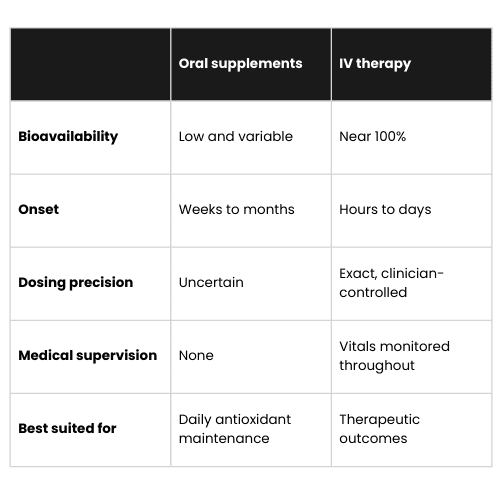
The gut is not a passive tube. It is an active, selective barrier — and for many nutrients, that selectivity creates a hard ceiling on how much can be absorbed regardless of dose. Vitamin C saturates its gut transporter (SVCT1) at doses around 500–1000mg. Magnesium triggers osmotic diarrhoea at high oral doses as the gut protects against hypermagnesaemia. B12 requires intrinsic factor, which declines with age and is absent in people with pernicious anaemia. Glutathione is almost entirely broken down in the gut before absorption. [2]
These are not formulation problems that better supplements can solve. They are physiological constraints. The gut wall is doing exactly what it is designed to do: regulate what enters the bloodstream. IV delivery doesn’t override this because the gut is broken — it uses a different door entirely. The pharmacokinetic consequence is a different concentration profile: higher peak plasma levels, faster tissue uptake, and in some cases, biological effects that are simply not achievable at oral doses.
A well-documented example is vitamin C. At 1.25g oral, mean peak plasma concentration reaches approximately 135 µmol/L. At the same dose IV, it reaches 885 µmol/L — more than six times higher. At doses up to 100g IV, plasma levels reach concentrations unreachable by any oral route, with complete renal clearance within 24 hours and no adverse physiological changes. [6] At 50g IV, plasma levels exceed 13,000 µmol/L: a concentration range that drives pro-oxidant effects in tumour microenvironments and saturates neutrophil stores in ways that oral dosing cannot approach. This is not a marginal difference — it changes what the molecule can do inside the body. [3]
For nutrients with adequate oral bioavailability and no urgent clinical timeline, oral supplementation remains appropriate and cost-effective. IV therapy is not a replacement for a good diet or a sensible supplement regimen. It is a tool for specific situations where speed, concentration, or absorption barriers make the IV route meaningfully superior.
If you want to know whether IV Therapy fits what you’re experiencing, our clinical team is happy to walk you through it
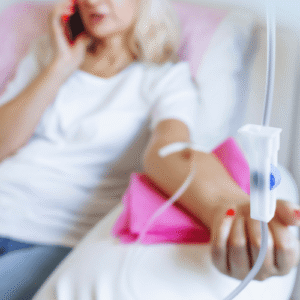
IV therapy has an excellent safety record in properly clinical settings — a track record built over decades of hospital use and, more recently, in well-run wellness environments. The risks that exist are real but manageable, and the most important variable is not the nutrient being infused but the setting and the people administering it.
The most common adverse effects are mild and transient: a cool sensation in the arm, a brief metallic taste (from B vitamins), mild flushing or warmth (from magnesium, especially if infused too quickly), or light nausea. These are infusion-rate effects — not toxicity signals — and they resolve within minutes when the drip rate is adjusted. At correctly calibrated rates, most patients experience none of them.
The more serious risks are patient-specific and require screening. Kidney disease is the most broadly relevant: several IV nutrients, including magnesium and vitamin C (which generates oxalate as a byproduct), are renally cleared, and impaired kidneys cannot safely process therapeutic IV doses. Cardiac conditions — particularly arrhythmias or heart failure — require physician clearance before any IV therapy, because changes in electrolyte balance and fluid volume can have cardiac consequences. G6PD deficiency, more prevalent in South Asian populations than in European ones, is a contraindication for high-dose vitamin C IV specifically, due to risk of haemolytic anaemia. [4]
In India, the variable that matters most is the clinic itself. Pharmaceutical-grade preparations from licensed pharmacies, single-use sterile equipment, clinician supervision during infusion, and a clear protocol for managing reactions: these are the baseline, not the premium. Clinical guidelines recommend that IV nutrient therapy be administered only in settings with qualified staff, appropriate screening, and emergency protocols in place. [8] The wellness IV market in India has grown faster than regulatory oversight has kept pace. Unqualified providers, informally compounded preparations, and minimal monitoring are not hypothetical risks — they are documented realities in some corners of the market. The questions to ask any clinic are direct: Where do your preparations come from? Who supervises the infusion? What happens if I react? The answers tell you everything you need to know.
Every IV session at a reputable clinic begins with a clinical consultation. Your health history, current medications, and specific goals are reviewed by a doctor or qualified clinician. This is not a formality — it is the stage at which contraindications are identified, the appropriate protocol is selected, and the infusion rate is calibrated to you specifically.
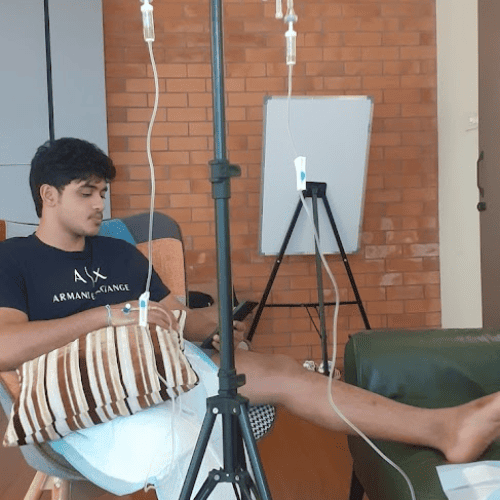
A small cannula is placed in a forearm vein — a brief, sharp moment followed by nothing. The drip begins. Depending on the protocol, you’re looking at 20 minutes for a simple Myers’ Cocktail, 45–90 minutes for vitamin C at wellness doses, or 2–4 hours for NAD+. The experience during the infusion is largely uneventful. Most patients read, work on their phones, or decompress. Some sleep. A mild coolness in the arm is common and normal.
Leaving the clinic, most people feel noticeably different within hours — the timeline varies by what was infused. Hydration effects are immediate. Magnesium’s muscle-relaxant and mental-decompression effects begin during the session. B vitamin energy improvements build over 12–24 hours. Vitamin C’s immune and skin effects develop over days. NAD+’s cognitive and energy improvements often peak at 24–72 hours as the coenzyme distributes through tissues. There is no required recovery period for any standard wellness IV protocol. Normal activities resume immediately.
Pricing in Indian metro cities varies significantly by protocol and provider. Hydration drips start around ₹1,500–₹2,500. Myers’ Cocktail sessions run ₹3,000–₹7,000. Vitamin C, glutathione, and B12 sessions typically fall in the ₹2,500–₹8,000 range. NAD+ is the most expensive protocol — ₹6,000–₹18,000 — reflecting both the cost of pharmaceutical-grade NAD+ and the longer infusion time required for safe delivery.
The spread within each range is meaningful. A fair price at any tier includes pharmaceutical-grade preparations from a licensed pharmacy, a genuine clinical consultation, trained administration, monitoring during the infusion, and physician access if something unexpected occurs. When a number looks lower than the range, something in that list has been removed. True Drip’s pricing is listed transparently at truedrip.in — with no hidden components.
If you want to know whether IV Therapy fits what you’re experiencing, our clinical team is happy to walk you through it

Hyderabad presents a specific combination of conditions that make IV therapy more relevant than in many other cities. The climate — high temperatures for most of the year — accelerates electrolyte and ascorbate depletion through sweat and UV-driven oxidative stress. The air quality, among the more polluted of Indian metros, creates a sustained oxidative burden that dietary antioxidant intake struggles to keep pace with. The professional culture — tech sector, pharma, finance, a significant proportion of the population working under high cognitive and time pressure — creates exactly the depletion pattern that IV therapy addresses: energy, resilience, recovery, and immune function that don’t keep up with demand.
True Drip is located in Somajiguda — centrally accessible from Banjara Hills, Jubilee Hills, Hitech City, Gachibowli, Kondapur, and Secunderabad. Every session includes a pre-infusion clinical consultation, pharmaceutical-grade preparations, clinician-supervised delivery, and continuous monitoring. The clinical standard doesn’t vary by protocol or patient. It’s the baseline we hold ourselves to because anything less isn’t IV therapy — it’s a drip in a room.
The True Health library linked below covers each protocol in depth. If you’re new to IV therapy, the Myers’ Cocktail article is a natural starting point — it’s the most versatile protocol and the one most people begin with. From there, NAD+, Vitamin C, and Glutathione address more specific goals.
The administration of fluids, nutrients, or therapeutic compounds directly into a vein through a small catheter, bypassing the digestive system and delivering substances to the bloodstream at 100% bioavailability.
The terms are used interchangeably. A ‘drip’ refers to the gravity-fed delivery mechanism. IV therapy is the broader term covering the clinical practice. In wellness contexts, ‘drip’ usually refers to a nutrient infusion as distinct from a hospital saline drip.
People with specific nutrient absorption issues, chronic fatigue or burnout not resolved by lifestyle changes, high oxidative load from stress or environment, athletes seeking faster recovery, those managing frequent illness, and people pursuing specific goals like skin improvement, migraine reduction, or biological age optimisation. It’s not a replacement for healthy habits — it’s a tool for when those habits aren’t enough.
Oral supplements are absorbed through the gut at rates limited by transporter capacity, stomach acid, and first-pass liver metabolism. IV therapy bypasses all of these, delivering 100% of the dose to the bloodstream. For nutrients with low oral bioavailability — vitamin C, glutathione, magnesium at high doses, B12 in people with absorption issues — the difference in what the body receives is substantial.
It depends on the protocol. Hydration: 20–30 minutes. Myers’ Cocktail: 20–45 minutes. Vitamin C (wellness dose): 45–90 minutes. Glutathione: 30–60 minutes. NAD+: 2–4 hours. B12: 15–30 minutes. Your clinician will advise based on dose and your individual response.
It depends entirely on the goal. For acute use — migraine relief, illness recovery, post-event hydration — a single session is appropriate. For optimisation and maintenance, monthly or bi-monthly sessions are typical. For significant depletion (burnout, post-illness recovery, documented deficiencies), an initial course of weekly sessions over 3–4 weeks is often recommended before spacing out.
The cannula insertion is a brief, sharp sensation — similar to a blood draw. Once in place, you feel nothing from the cannula itself. Some protocols cause mild sensations during infusion (warmth from magnesium, cool feeling in the arm), all of which are normal and manageable by adjusting the drip rate.
In properly clinical settings with appropriate screening and infusion rates, serious side effects are rare. The most common effects — mild flushing, brief nausea, coolness in the arm — are rate-related, not toxicity signals, and resolve immediately when the drip slows. Patient-specific risks (kidney disease, cardiac conditions, G6PD deficiency) are managed through pre-session screening.
People with severe kidney disease, active cardiac arrhythmias, heart failure, or haemochromatosis require physician clearance or should avoid IV therapy. G6PD deficiency is a specific contraindication for high-dose vitamin C IV. Pregnancy at therapeutic doses, and certain medications including warfarin and digoxin, require physician review. A proper clinical consultation before any session addresses these.
IV therapy operates under general wellness and medical practice frameworks in India. The CDSCO regulates pharmaceutical standards of individual drug substances. Clinical protocols, preparation standards, and oversight of the infusion itself depend on the individual provider. This is why the questions — where do your preparations come from, who supervises the session, what happens if I react — are not paranoid but essential.
If you want to know whether IV Therapy fits what you’re experiencing, our clinical team is happy to walk you through it
Contents Home Performance IV Therapy: Benefits, Safety, and What to...
Read MoreContents Home Hydration IV Therapy: Benefits, Safety, and What to...
Read MoreContents Home Immunity IV Therapy: Benefits, Safety, and What to...
Read MoreContents Home Magnesium IV Therapy: Benefits, Safety, and What to...
Read More