Contents Home Performance IV Therapy: Benefits, Safety, and What to...
Read More

Reviewer | 6th March | Read time – 11 mins
Your body already makes glutathione. Every cell, every day. It’s a small molecule built from three amino acids, and it quietly handles some of the most important work happening inside you right now — neutralising damage, clearing out toxins, keeping your immune system sharp, regulating the pigment in your skin.
The problem is that your supply peaks in your twenties and drops from there. Stress, pollution, alcohol, bad sleep, illness — they all drain it faster. By the time most people start noticing dull skin, low energy, or sluggish recovery, their glutathione is already well below where it should be.
That’s where Glutathione IV therapy comes in. And that’s what this article is about — what the treatment does, what the research actually shows, who it’s for, who it’s not for, and what you should know before booking a session.
There are five reasons people seek this treatment. Some have strong clinical evidence behind them. Some are still emerging. You deserve to know which is which, so we’ll be specific.
Yes. This is the benefit that drives most of the search interest in India, and the science supports it — with some important caveats.
Glutathione inhibits tyrosinase, the enzyme that drives melanin production, and shifts your pigment balance from darker eumelanin toward lighter pheomelanin. A 2025 narrative review in Cureus analysed multiple clinical studies and confirmed measurable reductions in melanin index scores, with IV delivery producing the most pronounced effects. [1]
But the timeline is not what social media suggests. The first few sessions are invisible — the changes are cellular. Around session four to six, your skin texture improves and a subtle glow starts to show. By weeks six to eight, most patients see genuine brightening and more even tone. After that, you’re maintaining. Your body doesn’t stop making melanin, so periodic sessions are what keep you there.
The evidence is moderate. The mechanism is well-understood. The results are real but gradual, and they require patience and consistency.
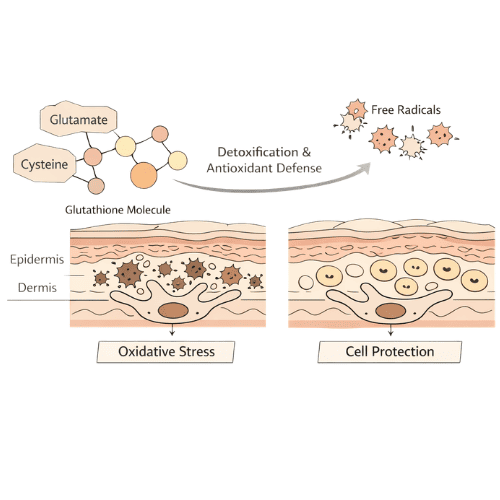
This is where the science is strongest.
Glutathione is central to Phase II liver detoxification — the process where your liver takes toxins, drug metabolites, and heavy metals and converts them into water-soluble compounds your body can eliminate. Most of the glutathione circulating in your blood originates from the liver. When it runs low there, the effects cascade.
In India, IV glutathione holds CDSCO approval for alcoholic fatty liver, liver fibrosis, cirrhosis, and alcoholic hepatitis. [9] A 2025 review in Biomedicines covering a decade of research found consistent improvements in ALT levels and oxidative stress markers among patients treated with glutathione, with benefits persisting months after treatment ended. [8]
If you live in an Indian city, drink moderately, or take medication regularly, your liver is processing more than you probably realise. The evidence here is strong.
Glutathione fuels both branches of your immune system — the innate first responders and the adaptive forces that learn and remember specific threats. It supports natural killer cell activity and T-lymphocyte proliferation, which are the mechanisms your body relies on to identify and eliminate pathogens.
A 2018 clinical study in the European Journal of Clinical Nutrition showed that glutathione supplementation elevated both NK cell cytotoxicity and lymphocyte counts. [3] IV delivery’s higher absorption rate should amplify these effects, though direct IV-specific immune trials are still catching up.
In a country where urban air quality, seasonal illness cycles, and post-pandemic awareness have made immune resilience a genuine priority, this benefit is worth paying attention to. The evidence is moderate and growing.
Biological ageing is driven, in significant part, by the accumulated oxidative damage to your DNA, mitochondria, and cell membranes over decades. Glutathione is the molecule your body uses to prevent and repair that damage. It scavenges free radicals directly, protects mitochondrial function, and recycles other antioxidants including vitamins C and E. [6]
The biochemistry here is not contested. What’s still being studied is whether supplementing glutathione intravenously translates into measurable anti-ageing outcomes in controlled trials. The mechanism is strong. The clinical outcome data is still being built.
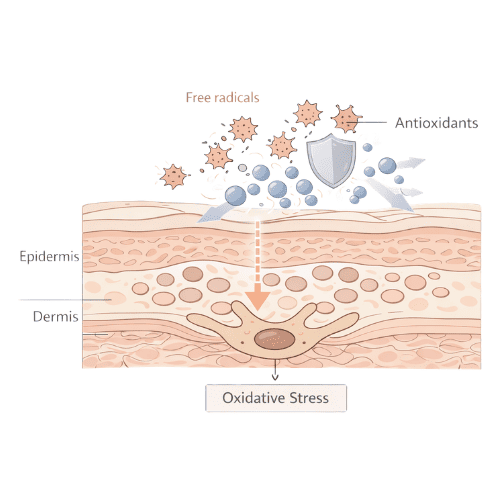
Glutathione is the most abundant antioxidant in the human brain. Depleted levels in the substantia nigra have been consistently documented in patients with Parkinson’s disease, and neuroprotective research is active. This is emerging science, not a reason to book a session today, but it’s worth knowing about as the field develops.
Reviewer | Date | Read time
Glutathione is a tripeptide — three amino acids (cysteine, glycine, glutamic acid) linked together. Your liver synthesises it, and it’s found in virtually every human cell at concentrations comparable to glucose and potassium. That tells you something about how fundamental it is.
It operates on four fronts simultaneously. As an antioxidant, it neutralises free radicals before they can damage your cells, and it regenerates vitamins C and E in the process. As a detoxifier, it binds to toxins and heavy metals in the liver so your kidneys can excrete them. [7] As an immune modulator, it fuels the cells that detect and destroy threats. And as a pigment regulator, it inhibits the enzyme that produces melanin.
The reason this matters for the IV conversation is that glutathione levels decline naturally with age, and that decline is accelerated by exactly the things most urban adults deal with daily — pollution, stress, poor sleep, processed food, and alcohol. The molecule your body depends on for protection is the same one it loses fastest under pressure.
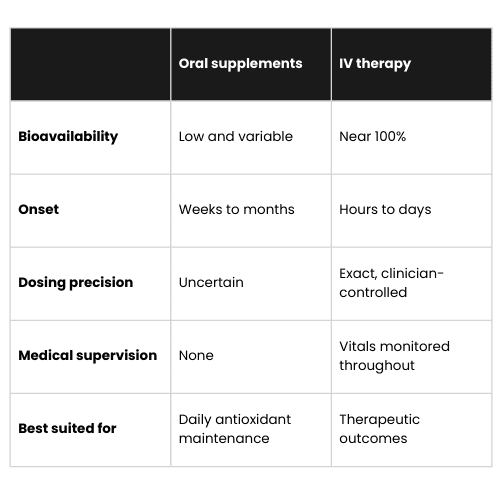
Glutathione is a peptide, and your digestive system is built to dismantle peptides. That’s its function. When you swallow a glutathione capsule, stomach acid and intestinal enzymes degrade a significant portion of it before it reaches your bloodstream.
A 2017 pilot study in BMC Gastroenterology found that oral glutathione at 300 mg daily produced improvements in liver markers, but the researchers noted that further studies are needed to confirm whether oral delivery reliably achieves therapeutic concentrations systemically. [2] Liposomal formulations — glutathione encased in a lipid shell to survive digestion — perform better and are a reasonable option for daily maintenance. [3]
IV delivery bypasses the entire digestive process. The glutathione enters your bloodstream directly, intact, with near-complete bioavailability. This is why clinical settings that use glutathione therapeutically — for liver disease, immune support, or aesthetic medicine — use IV administration.
If you want to know whether Glutathione IV therapy fits what you’re experiencing, our clinical team is happy to walk you through it

When administered by a qualified medical professional using pharmaceutical-grade formulation in a clinical environment, glutathione IV therapy has a well-documented safety profile. Most patients experience nothing beyond mild, transient side effects.
Injection site soreness is common and resolves within hours. Occasional nausea during the infusion is self-limiting. Headache is uncommon and typically indicates dehydration. Allergic reactions are rare; pre-screening is standard practice. A temporary reduction in blood pressure has been documented, which is why vital signs are monitored continuously throughout the session.
The risks in this space are not primarily about the molecule. They’re about the setting. India’s IV therapy market includes providers operating without adequate clinical oversight, using non-pharmaceutical-grade formulations, in environments that don’t meet medical standards. The glutathione is the same. The difference is everything around it. Where you get treated matters as much as what you’re getting.
Pregnant or breastfeeding women — there is insufficient safety data for foetal or neonatal exposure. Patients on active chemotherapy — glutathione’s antioxidant mechanism may interfere with certain drug protocols, and oncologist clearance is required. Anyone with a documented glutathione allergy. Patients with severe renal impairment, where clearance capacity is compromised. Asthmatic patients should discuss suitability with their physician before proceeding.
Injection site soreness is common and resolves within hours. Occasional nausea during the infusion is self-limiting. Headache is uncommon and typically indicates dehydration. Allergic reactions are rare; pre-screening is standard practice. A temporary reduction in blood pressure has been documented, which is why vital signs are monitored continuously throughout the session.
The risks in this space are not primarily about the molecule. They’re about the setting. India’s IV therapy market includes providers operating without adequate clinical oversight, using non-pharmaceutical-grade formulations, in environments that don’t meet medical standards. The glutathione is the same. The difference is everything around it. Where you get treated matters as much as what you’re getting.
It starts with a conversation. A clinician reviews your health history, your medications, your goals, and any contraindications. This is not a formality. It’s how your dosing is determined, your risks are flagged, and your treatment plan is shaped around you specifically.
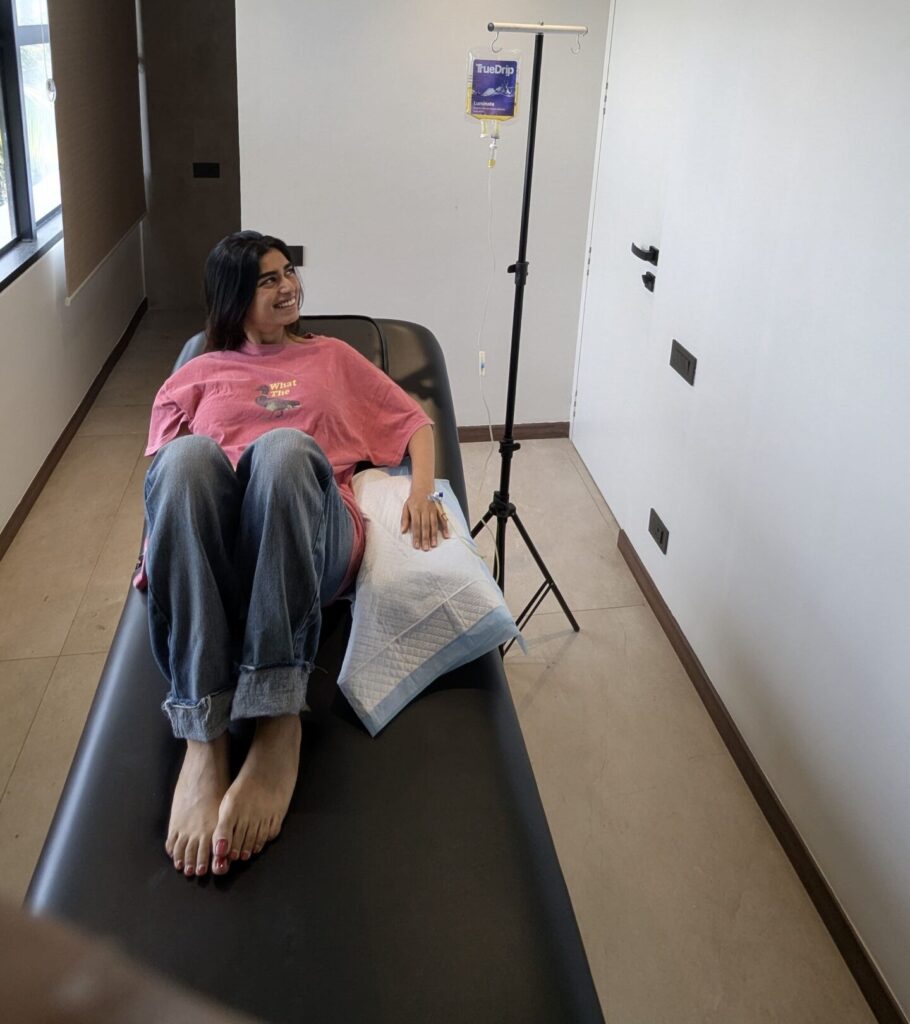
Then a small IV line is placed — identical to a blood draw — and the glutathione drips in over 30 to 60 minutes. Dosing typically ranges from 600 mg to 2,400 mg depending on your weight and objectives. Most people read, work on their phone, or just sit quietly. There’s nothing dramatic about the experience. It’s a calm half-hour in a comfortable chair.
Afterwards, you leave. No downtime. Some people notice sharper focus or a lift in energy within hours. Others don’t feel anything different until a few sessions in. Both responses are normal and expected.
Sessions typically range from ₹8,000 to ₹15,000, depending on the clinic, city, dosage, and formulation quality. A standard skin brightening course runs 8 to 15 sessions. Most patients transition to monthly maintenance afterwards.
When you’re comparing prices, ask what’s included. Clinical consultation. Pharmaceutical-grade product. Vital sign monitoring. Post-session follow-up. If a number seems unusually low, one of those things has been removed — and in healthcare, the things that get removed first are usually the things that keep you safe.
If you want to know whether Glutathione IV therapy fits what you’re experiencing, our clinical team is happy to walk you through it

Hyderabad has year-round UV exposure that contributes to hyperpigmentation. Its air quality puts sustained load on your liver and immune system. And the city has a large, growing population of health-conscious professionals — particularly across the tech corridor — who want evidence-based treatments, not wellness hype.
The demand here reflects a specific kind of patient: informed, time-constrained, and skeptical of anything that doesn’t have science behind it. That’s exactly the audience this treatment is designed for.
True Drip serves patients across Jubilee Hills and Banjara Hills, where the focus tends toward skin brightening and anti-ageing. In Hitech City, Gachibowli, and Madhapur, we see more interest in recovery, energy, and cognitive performance — professionals looking to function at a higher level. Kondapur draws a younger, fitness-oriented demographic interested in biohacking and performance optimisation.
Every session at True Drip includes a clinical consultation, pharmaceutical-grade formulation, and continuous medical supervision. That’s not a premium tier. It’s the only way we operate.

A medical treatment that delivers the antioxidant glutathione directly into your bloodstream through an IV drip. It achieves near-complete absorption, bypassing the digestive losses that reduce oral supplement efficacy.
Yes, when administered by a qualified professional using pharmaceutical-grade product in a clinical setting. It is not recommended during pregnancy, chemotherapy, or for patients with known glutathione allergies.
Most patients notice skin texture changes by session three or four. Visible brightening typically appears between weeks six and eight. Your clinician will design a schedule based on your specific goals.
Your digestive system degrades most oral glutathione before it reaches your bloodstream. IV delivery achieves near 100% bioavailability.
Yes, gradually. It inhibits melanin production and shifts pigment balance toward lighter tones. Clinical studies confirm measurable results. The effect requires multiple sessions and ongoing maintenance.
₹2,500 to ₹15,000 per session. A full course is typically 8 to 15 sessions. Pricing varies by clinic, city, and dosage.
Pregnant or breastfeeding women, patients on active chemotherapy, anyone with a known glutathione allergy, and patients with severe kidney disease.
With monthly maintenance sessions, indefinitely. Without maintenance, skin tone gradually returns toward its natural baseline over several months.
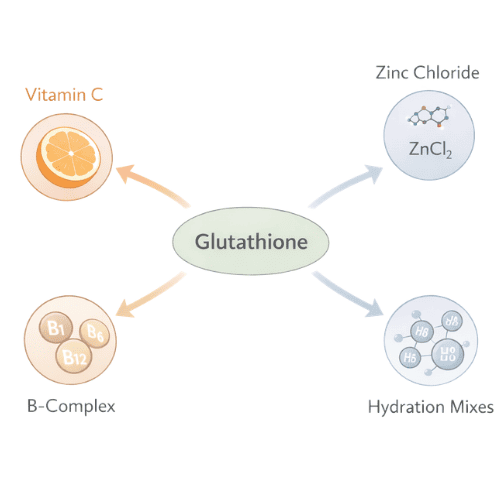
Yes. Glutathione and Vitamin C are synergistic — glutathione recycles Vitamin C, which extends its antioxidant activity. Many clinical protocols combine them.
Yes. True Drip provides clinician-supervised glutathione IV therapy across Jubilee Hills, Banjara Hills, Hitech City, Gachibowli, Kondapur, and Madhapur.
If you want to know whether Glutathione IV therapy fits what you’re experiencing, our clinical team is happy to walk you through it

[1] Alzahrani et al. (2025). Cureus, 17(1). PMC11862975
[2] Honda et al. (2017). BMC Gastroenterology, 17:96. PMC5549431
[4] Sonthalia et al. (2018). Dermatol Pract Concept, 8(1):15–21. PMC5808366
[6] Pizzorno J. (2014). Glutathione. Integr Med, 13(1):8–12. PMC4684116
[8] Ogbeide et al. (2025). Biomedicines, 13(3):644. PMC11940638
Contents Home Performance IV Therapy: Benefits, Safety, and What to...
Read MoreContents Home Hydration IV Therapy: Benefits, Safety, and What to...
Read MoreContents Home Immunity IV Therapy: Benefits, Safety, and What to...
Read MoreContents Home Magnesium IV Therapy: Benefits, Safety, and What to...
Read More