Contents Home Performance IV Therapy: Benefits, Safety, and What to...
Read More


Reviewer | 22nd April | Read time – 11 mins
Magnesium is involved in more than 300 enzymatic reactions — energy production, DNA synthesis, protein building, nerve signalling, muscle contraction. It is also one of the most commonly depleted minerals in the modern body, and one of the hardest to correct through diet alone. Processed food is stripped of it. Chronic stress burns through it. Soil depletion means it is present in food at lower concentrations than it was a generation ago. The result is a population that is, in large numbers, functionally depleted — not severely enough to show on a standard blood test, but enough to feel it.
The diagnostic problem compounds the clinical one. Serum magnesium is a poor indicator of total body stores because less than 1% of the body’s magnesium circulates in the blood. The body maintains serum levels by pulling from bone and intracellular stores — so by the time a blood test shows deficiency, it is already substantial. Most people running on depleted magnesium don’t know it. They just feel worse than they should.
This article covers what magnesium IV therapy does and where the evidence is strongest, how magnesium works in the body, why IV delivery matters when oral supplementation is limited, who is most at risk, what a session involves, what it costs in India, and what to look for in a provider.
Magnesium IV therapy is a targeted correction for one of the most prevalent and underdiagnosed nutrient deficiencies. The evidence is strongest for acute migraine treatment and muscle function, with solid mechanistic support across stress, sleep, and cardiovascular health.
Magnesium is the most clinically supported mineral for migraine, and IV delivery is the route with the fastest and most direct evidence. Migraine sufferers consistently show lower brain magnesium levels than non-sufferers. Low magnesium promotes cortical spreading depression, triggers substance P release, causes cerebral vasospasm, and disrupts mitochondrial function — all established mechanisms in migraine pathophysiology. IV magnesium is commonly used in the treatment of migraine and supplementation has been shown to be safe in adults, with several proposed mechanisms accounting for benefit including mitochondrial dysfunction reversal and vasospasm reduction. [3]
A meta-analysis of randomised controlled trials found that intravenous magnesium reduces acute migraine attacks within 15 to 45 minutes of infusion, with oral magnesium supplementation reducing frequency and intensity over time. [4] A systematic review concluded that high-dose magnesium provides Grade C evidence for migraine prophylaxis — modest but real, and clinically meaningful for patients with frequent attacks. [6] For migraine patients with suboptimal magnesium status, IV delivery is the most direct intervention available.
Magnesium is the body’s primary calcium antagonist at the cellular level. It competes with calcium at the neuromuscular junction, moderating the strength of muscle contractions. When magnesium is depleted, calcium-mediated contraction becomes less regulated — muscles contract more easily, hold tension longer, and cramp with less provocation. A 2021 review of 81 randomised controlled trials found evidence supporting magnesium’s efficacy across multiple pain and muscle-related presentations including post-operative pain and fibromyalgia, with the level of evidence globally modest but consistent. [5] The muscle-relaxant effect of IV magnesium is often perceptible within the infusion itself.
Magnesium acts as a natural antagonist at NMDA receptors — the receptors that become hyperactive under chronic psychological stress — and regulates the HPA axis that governs cortisol production. Chronically elevated stress depletes magnesium, and magnesium depletion amplifies the stress response in a self-reinforcing cycle that oral supplementation alone often cannot break fast enough. [7] IV delivery achieves therapeutic intracellular concentrations faster than oral forms, making it particularly relevant for patients in acute burnout or high-stress periods.
Magnesium supports sleep through several pathways: it activates the parasympathetic nervous system, regulates melatonin production, and binds GABA receptors that promote sleep onset and maintenance. Subclinical magnesium deficiency may contribute to sleep disruption or deprivation by exacerbating inflammation and oxidative stress, and magnesium supplementation has been shown in studies to reduce insomnia severity and improve sleep quality. [8] For patients with disrupted sleep linked to high stress and low magnesium, IV correction addresses the physiological root rather than just the symptom.
Magnesium is required for every step of ATP synthesis and for insulin receptor signalling — making it central to both cardiovascular function and metabolic health. Subclinical magnesium deficiency is associated with hypertension, arrhythmia, coronary artery disease, metabolic syndrome, and insulin resistance, and should be considered a public health crisis given how widespread it is. [1] Low magnesium levels are observed in conditions including hypertension, arrhythmia, and metabolic syndrome, with mechanisms including vascular tone dysregulation, impaired insulin sensitivity, and sympathetic nervous system overactivation. [2]
Reviewer | Date | Read time
Magnesium is the fourth most abundant mineral in the body and the second most abundant intracellular cation. Over 300 enzymes require it as a cofactor — essentially any process that involves energy transfer, DNA handling, or protein synthesis has magnesium somewhere in the chain. In the mitochondria, it stabilises the ATP molecule itself: the active form of ATP is Mg-ATP, meaning magnesium is not just involved in energy production but is structurally part of the energy currency.
At the neurological level, magnesium is a gating ion for NMDA receptors — it physically blocks the receptor channel at rest, allowing only appropriate levels of calcium entry. When magnesium falls, this gate weakens. NMDA receptors become hyperreactive, neural excitability increases, and the sensitivity thresholds for pain, stress, and sensory stimulation all lower. This is the neurological mechanism behind magnesium-related migraines, anxiety amplification, and poor stress tolerance. Magnesium deficiency is difficult to detect on standard blood tests because serum magnesium represents less than 1% of total body stores — the body maintains serum levels by depleting bone and intracellular reserves. [10]
In the muscles, magnesium and calcium work in opposition. Calcium initiates contraction; magnesium enables relaxation. This balance governs everything from skeletal muscle performance and recovery to smooth muscle tone in blood vessels and the heart. Disrupted magnesium-calcium ratio contributes to hypertension, arrhythmia, and the sustained muscle tension that presents as chronic pain.
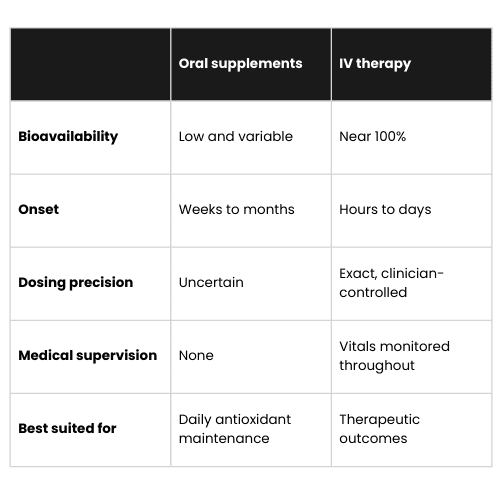
Oral magnesium works — for maintenance, for mild depletion, and for patients without GI sensitivity. Magnesium glycinate and magnesium citrate are the best-absorbed oral forms, reaching meaningful plasma levels at tolerated doses. The limitation is a well-known one: magnesium at high oral doses causes osmotic diarrhoea as the gut limits absorption to protect against hypermagnesaemia. The gut is doing its job, but the consequence is a hard ceiling on how much magnesium can be delivered orally without GI side effects.
IV delivery bypasses this entirely. The full therapeutic dose enters circulation directly, achieving intracellular concentrations that oral supplementation takes weeks to replicate. For acute applications — migraine in progress, severe muscle cramps, acute burnout — the speed matters as much as the dose. Oral magnesium cannot respond quickly enough.
The other consideration is intracellular repletion. Because magnesium is predominantly intracellular, correcting a significant depletion through oral supplementation takes time — cells have to gradually absorb magnesium across their membranes over days and weeks. IV delivery drives plasma concentrations high enough to accelerate this gradient-driven uptake. For patients who want to reset depleted stores rather than just maintain adequate intake, IV is the faster and more direct route.
If you want to know whether Magnesium IV Therapy fits what you’re experiencing, our clinical team is happy to walk you through it

At standard wellness doses administered at correct infusion rates, the safety profile is excellent. The most common effects — flushing, a sensation of warmth or heat, and a brief feeling of low blood pressure — are rate-dependent, not dose-dependent. Slow the infusion, and they resolve within minutes. Magnesium is a vasodilator and mild calcium channel blocker; the physical sensations at correct rates are often experienced as relaxation rather than discomfort.
The main contraindication is significant kidney disease. Magnesium is renally cleared — impaired kidneys cannot process therapeutic IV doses safely, and hypermagnesaemia (magnesium toxicity) is a real risk in this population. Severe cardiac arrhythmias and active heart block also require physician clearance. Patients on digoxin need monitoring, as the two have clinically relevant interactions.
Hypotension is a risk if infusion rates are too aggressive, particularly in patients who are already dehydrated. A pre-infusion clinical assessment and standard monitoring during the drip address this. In a properly supervised clinical setting, serious adverse events are rare.
In India, as with all IV therapy, pharmaceutical-grade magnesium chloride prepared in a licensed pharmacy under sterile conditions is the baseline standard. The quality of preparation matters as much as the dose.
The consultation covers health history, current medications, and presenting symptoms. For migraine patients, understanding the frequency and pattern of attacks helps calibrate the dose and determine whether a single-session intervention or a short course is appropriate.
The infusion runs 20 to 45 minutes through a small forearm cannula. At a correctly calibrated rate, the magnesium experience is notably physical — patients often describe a gradual wave of relaxation, a softening of muscle tension, and a quieting of mental activity. For patients who come in tense and depleted, it can feel disarmingly immediate. At too-fast rates, the same vasodilatory effect produces flushing and heat — adjusted by slowing the drip.
Most patients leave noticeably calmer and with less physical tension. For migraine patients, relief typically develops over 15 to 45 minutes following infusion. For stress and burnout presentations, the decompression effect is often felt during the session itself. Energy improvements from the ATP-synthesis pathway build over 12 to 24 hours. There is no recovery period.
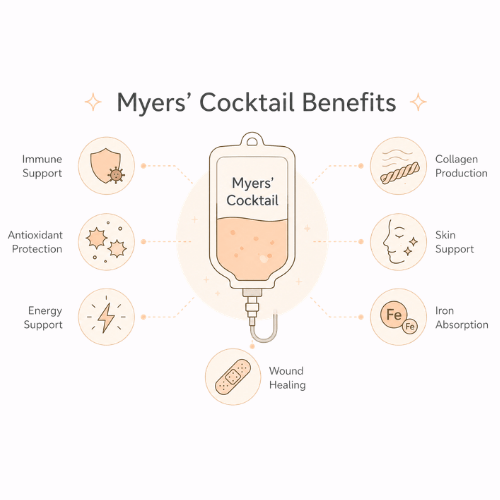
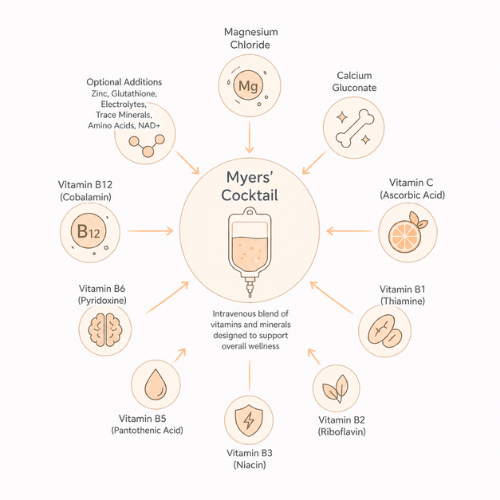
Standalone magnesium IV sessions typically range from ₹2,000 to ₹5,000 in Indian metro cities. Magnesium is also a component of the Myers’ Cocktail, which delivers it alongside B vitamins and vitamin C in a single session at similar price points.
A fair price covers pharmaceutical-grade magnesium chloride from a licensed pharmacy, a clinical consultation, trained administration, monitoring during infusion, and physician oversight. True Drip’s pricing is listed transparently at truedrip.in.
If you want to know whether Magnesium IV Therapy fits what you’re experiencing, our clinical team is happy to walk you through it

Hyderabad’s population faces a specific magnesium risk profile. India’s food supply — heavily dependent on processed and refined foods in urban settings — is magnesium-depleted before it reaches the table. The city’s professional culture amplifies this: subclinical magnesium deficiency is estimated to affect 10–30% of the general population and is driven by chronic disease, medications, decreased food crop magnesium content, and processed food consumption. [1] Add the city’s heat — magnesium is lost in sweat — and the pharmacological depletors common in this demographic (metformin, proton pump inhibitors, diuretics), and significant magnesium depletion is the norm rather than the exception.
The migraine cohort is particularly relevant in Hyderabad. The tech workforce experiences migraine rates consistent with high-stress, screen-intensive occupations. The magnesium-migraine connection is the strongest single-ingredient evidence base in IV wellness therapy, and many patients who haven’t connected their headache pattern to magnesium status respond dramatically to IV correction.
True Drip’s clinical team screens for the key depletion risk factors as standard — medications, diet, sweat load, stress history — before calibrating the appropriate dose. Every session uses pharmaceutical-grade magnesium, delivered under clinician supervision.

The direct intravenous delivery of magnesium chloride in a saline solution, bypassing the gut absorption ceiling and achieving intracellular concentrations faster and more completely than oral supplementation.
People with frequent migraines or tension headaches, chronic muscle tension or cramps, high-stress professional lifestyles, disrupted sleep, patients on magnesium-depleting medications (metformin, PPIs, diuretics), and anyone with cardiovascular risk factors linked to low magnesium status.
The muscle-relaxant and vasodilatory effects are often perceptible during the infusion itself. Migraine relief typically develops within 15 to 45 minutes of infusion. Stress and sleep improvements build over the following 24 to 48 hours. Energy improvements from metabolic pathway restoration take 12 to 24 hours.
For acute applications — migraine, severe muscle cramps, acute stress depletion — IV is significantly faster and achieves higher intracellular concentrations. For daily maintenance and mild depletion, good-quality oral magnesium glycinate or citrate is appropriate. IV resets; oral maintains.
Yes — the Myers’ Cocktail includes magnesium alongside B vitamins and vitamin C. If your primary goal is migraine prevention or significant magnesium repletion, a standalone magnesium IV or a higher-magnesium Myers’ formulation may be more appropriate. Your clinician will advise.
At standard doses and correct infusion rates: mild flushing, warmth, or a brief sensation of low blood pressure. These are rate-dependent and resolve immediately when the drip slows. Serious adverse events are rare in properly supervised clinical settings.
People with significant kidney disease, active heart block, or severe cardiac arrhythmias. Patients on digoxin require physician review. Anyone with low blood pressure or active hypotension should be assessed before proceeding.
For active migraine prevention: weekly or bi-weekly for 4 to 6 weeks, then monthly. For stress and sleep: monthly maintenance. For acute migraine: single session as needed. Your clinician will tailor the schedule to your presentation.
Serum magnesium will rise transiently after IV delivery, but this is a poor indicator of intracellular repletion. Symptoms — reduced muscle tension, better sleep, fewer migraines — are more clinically meaningful markers of adequate magnesium status than serum levels.
Magnesium’s role as an NMDA receptor antagonist and HPA axis regulator makes it directly relevant to anxiety and stress physiology. [7] Clinical evidence for IV magnesium specifically targeting anxiety is limited, but the mechanistic basis is strong and the clinical observation consistent. Patients with anxiety symptoms driven by chronic stress and depletion respond well.
If you want to know whether Magnesium IV Therapy fits what you’re experiencing, our clinical team is happy to walk you through it

Contents Home Performance IV Therapy: Benefits, Safety, and What to...
Read MoreContents Home Hydration IV Therapy: Benefits, Safety, and What to...
Read MoreContents Home Immunity IV Therapy: Benefits, Safety, and What to...
Read MoreContents Home Magnesium IV Therapy: Benefits, Safety, and What to...
Read More