Contents Home Performance IV Therapy: Benefits, Safety, and What to...
Read More

Reviewer | 22nd April | Read time – 11 mins
Intense training imposes a physiological debt that most athletes underestimate. The oxidative stress from high-intensity exercise, the micronutrient depletion from prolonged exertion, the inflammatory state that follows significant tissue breakdown, and the immune suppression window that opens in the hours after hard training — all of these have documented biological mechanisms. And all of them compound when recovery is inadequate between sessions.
Performance IV therapy is a targeted approach to accelerating the recovery side of the training equation. It is not a shortcut to fitness. It does not replace the training stimulus. What it does is reduce the time and physiological cost of recovery, allowing athletes and high-output individuals to train more consistently, recover faster, and sustain performance across a demanding schedule.
This article covers what performance IV therapy contains and what the evidence says for each component, how intense exercise depletes the body, why IV delivery matters in a performance context, who it is most useful for, what a session involves, what it costs in India, and what to look for.
Performance IV therapy is a multi-component protocol — the specific formulation varies by clinic, but the core ingredients address the key physiological consequences of intense training: oxidative stress, micronutrient depletion, amino acid availability, electrolyte loss, and immune function.
Intense exercise generates reactive oxygen species (ROS) in proportion to the intensity and duration of effort. These free radicals cause lipid peroxidation, protein oxidation, and DNA strand breaks in muscle cells — the cellular-level damage that manifests as delayed onset muscle soreness and fatigue. Antioxidant capacity — driven primarily by glutathione and vitamin C — is the body’s defence against this oxidative load. Glutamine supplementation at 0.3g/kg daily for 14 days reduced oxidative stress markers and improved antioxidant system function after exhaustive exercise, reducing the GSSG/GSH ratio and TBARS in muscle tissue. [2] Combined with vitamin C, which recycles glutathione back to its active form, the antioxidant components of performance IV therapy directly address exercise-induced oxidative damage.
Glutamine is the most abundant amino acid in plasma and skeletal muscle, and it is conditionally essential during periods of intense exercise — meaning the body cannot synthesise enough to meet demand and relies on exogenous supply. Glutamine plays a vital role in energy production, nitrogen transport, antioxidant defence, and immune function, and intense physical activity reduces plasma glutamine levels, making supplementation relevant to recovery. [3] L-carnitine supports fatty acid transport into mitochondria, improving fat utilisation during recovery and reducing reliance on glycogen. B vitamins are cofactors in the energy metabolism that drives the repair process itself.
Magnesium supports protein synthesis and muscle relaxation post-contraction, addressing the calcium-magnesium imbalance that contributes to prolonged soreness and tension. Evidence from 81 RCTs supports magnesium’s efficacy in reducing post-operative and exercise-related pain, with the combination of muscle relaxation and analgesic properties particularly relevant to high-load training. [5]
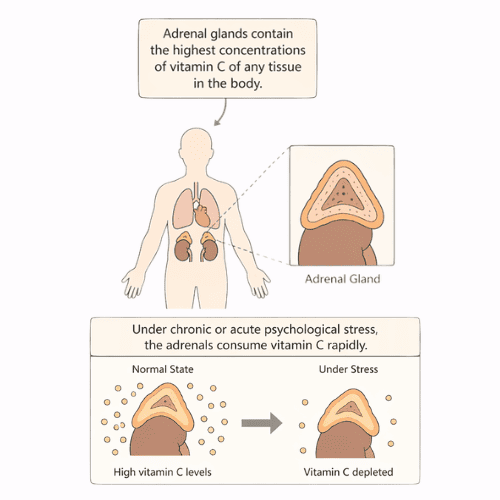
The ‘open window’ hypothesis describes the 3 to 72-hour period after intense exercise during which immune function is transiently suppressed — white blood cell activity decreases, natural killer cell function falls, and susceptibility to upper respiratory infection increases. This is the reason elite athletes frequently become ill in the days after major competition. Vitamin C reduces exercise-induced cortisol elevation and mitigates the post-exertion immune suppression window, supporting immune function during the vulnerable recovery period. [4] Combined with zinc, which supports T-cell and natural killer cell activity, the immune-relevant components of performance IV therapy directly target this post-training vulnerability.
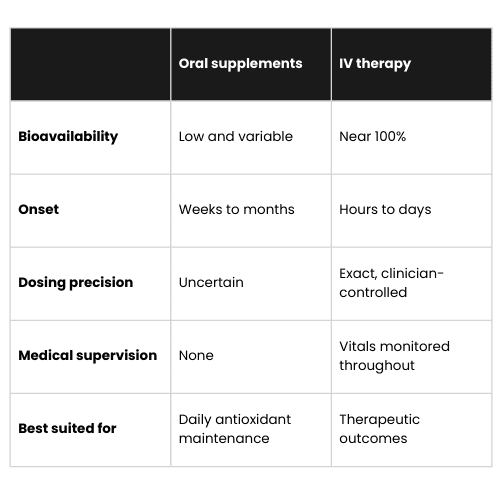
B vitamins — B1, B2, B3, B5, B6, and B12 — are cofactors in the Krebs cycle and electron transport chain that convert food into ATP. When these are depleted by the metabolic demands of training, energy production efficiency falls. Adequate B vitamin and mineral status supports energy metabolism, reduces fatigue, and improves resilience under physical and psychological stress, with deficiency impairing multiple steps of cellular energy production. [6] IV delivery achieves therapeutic concentrations faster and more completely than oral supplementation, particularly relevant when recovery windows are tight.
High-intensity and endurance exercise in hot conditions — the reality for most athletes in Hyderabad — generates sweat rates that significantly exceed typical replacement capacity. Electrolyte losses accompany fluid losses, and the combination of dehydration and electrolyte imbalance degrades both performance and recovery. IV hydration is clinically indicated for severe dehydration over 7% body weight loss and exertional heat illness, with electrolyte replacement essential alongside fluid restoration. [8] Performance IV therapy addresses both simultaneously, delivering fluids and electrolytes at 100% bioavailability.
Reviewer | Date | Read time
The physiological cost of intense training is broader than most athletes account for. Glycogen depletion and muscle microtrauma are the obvious components. Less appreciated are the micronutrient costs: B vitamins consumed by the metabolic demand of exercise, vitamin C depleted by the antioxidant response to oxidative stress, magnesium lost in sweat and consumed by the ATP synthesis driven by muscle contraction. These depletions compound across training sessions when recovery nutrition is inadequate.
The immune system is a significant consumer of post-exercise resources. The inflammatory and immune response to muscle damage and oxidative stress requires amino acids, micronutrients, and energy — competing with the repair and regeneration demands of the muscles themselves. Intense physical activity causes reductions in plasma glutamine levels as immune cells upregulate their consumption, creating conditional glutamine deficiency that impairs both immune function and muscle recovery simultaneously. [3]
The result is a physiological environment where the demand on recovery nutrition is highest at exactly the time when appetite and gut function are often impaired — post-exercise nausea, reduced appetite from elevated cortisol, and GI stress from high-intensity efforts all limit what can be absorbed orally. IV delivery addresses this directly
Post-exercise nutrition through food and oral supplements is appropriate for most training scenarios and should remain the foundation of recovery. Performance IV therapy is an accelerant and a correction tool for specific situations — not a replacement for sound nutrition.
The relevant advantage of IV delivery in a performance context is speed and bioavailability under physiological stress. When the gut is irritated from intense exercise — which commonly causes reduced motility, increased intestinal permeability, and nausea — oral absorption is impaired at exactly the time nutrient demand is highest. IV delivery bypasses this entirely. Glutamine is anti-fatigue, reduces muscle ammonia accumulation, and supports glycogen resynthesis — but plasma glutamine falls during intense exercise faster than oral supplementation during exercise can replace it. [1]
The other argument is concentration. Therapeutic doses of glutamine, combined vitamin C, magnesium, and B vitamins at IV concentrations exceed what can be practically delivered through food in a short recovery window. For athletes competing or training on consecutive days, compressing recovery into hours rather than days has direct performance implications.
If you want to know whether Performance IV Therapy fits what you’re experiencing, our clinical team is happy to walk you through it

At standard formulations and infusion rates, the safety profile is good. The individual components — glutamine, B vitamins, vitamin C, magnesium, electrolytes — have well-established safety records. The main considerations are the same as for any IV therapy: kidney function (magnesium and vitamin C are renally cleared), G6PD status (high-dose vitamin C contraindication), and cardiac history.
For athletic populations specifically: WADA prohibits IV infusions over 100ml within a 12-hour period without a Therapeutic Use Exemption. Athletes subject to anti-doping regulations should confirm their status before proceeding. True Drip’s clinical team can advise on this directly.
Glutamine at therapeutic doses is well-tolerated. Very high doses have been associated with mild GI discomfort when given orally — IV delivery bypasses this. Amino acid infusions can occasionally cause a warm sensation or mild nausea if given too quickly, managed by adjusting the rate.
The consultation covers training load, recent competition schedule, current symptoms, and goals. Performance IV therapy sessions are often booked within 24 to 48 hours of a major training session or competition. The specific formulation — more glutamine for muscle repair, more antioxidants for oxidative stress, more magnesium for cramping — is adjusted to the individual presentation.
Sessions run 45 to 60 minutes depending on the full formulation. The experience is largely uneventful — a mild warmth from the magnesium, nothing else notable at correct infusion rates. Most patients notice the decompression of muscle tension during the session, with energy improvements building over the following 12 to 24 hours.
Recovery effects are typically perceptible within 24 hours: reduced muscle soreness, better sleep quality, faster return to normal energy levels. For athletes, the clearest marker is how they feel at the next training session — the standard expectation is noticeably better than unassisted recovery over the same period.
Performance IV formulations typically range from ₹3,500 to ₹8,000 in Indian metro cities, reflecting the complexity of the formulation and the clinical time involved. Sessions are most commonly used after major training blocks, competitions, or as part of a structured periodised recovery programme.
True Drip’s performance protocol pricing is listed at truedrip.in. For athletes training at high volume, a course arrangement is typically more cost-effective than individual sessions.
If you want to know whether Performance IV Therapy fits what you’re experiencing, our clinical team is happy to walk you through it

Hyderabad has a growing and serious athletic community — marathon runners, cricket players, gym athletes, cyclists, and the large corporate fitness population in Hitech City, Gachibowli, and Kondapur. The city’s heat compounds the recovery challenge significantly: training in 38°C generates oxidative and dehydration loads that training in temperate conditions does not.
True Drip’s performance protocol is calibrated to the Hyderabad athletic context — heavier on electrolytes and magnesium to address sweat-driven losses, with vitamin C and glutathione for the elevated oxidative burden of heat training. Every session begins with a clinical conversation about what the athlete is recovering from and what they’re preparing for.
Every True Drip session uses pharmaceutical-grade preparations, clinician supervision, and continuous monitoring. The clinical standard applies to performance patients the same way it applies to every other protocol.
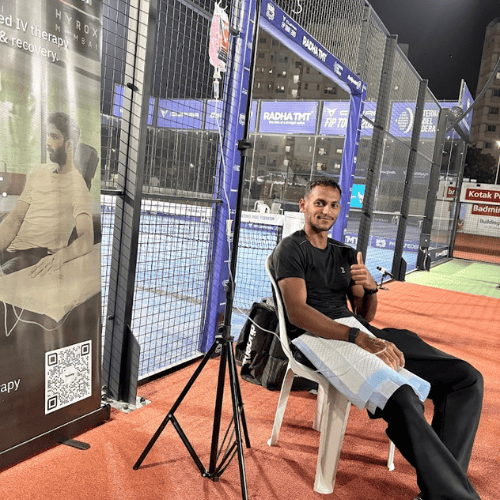
A multi-component IV infusion targeting the specific physiological consequences of intense exercise — oxidative stress, amino acid depletion, micronutrient loss, immune suppression, and electrolyte imbalance. Typically contains glutamine, B vitamins, vitamin C, magnesium, glutathione, and electrolytes.
Athletes training at high volume or intensity, people competing in endurance events, those recovering from major training blocks or competitions, and high-output professionals with performance demands that make fast recovery valuable.
Most effectively within 12 to 48 hours after a major training session or competition, when the physiological debt is highest and recovery nutrition demand is greatest. Some athletes also use it 24 hours before a major event for pre-loading hydration and micronutrients.
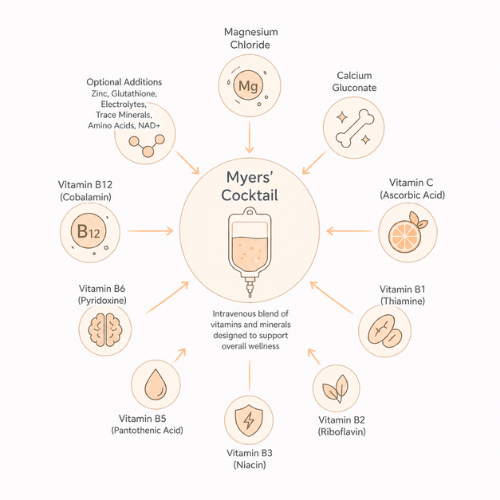
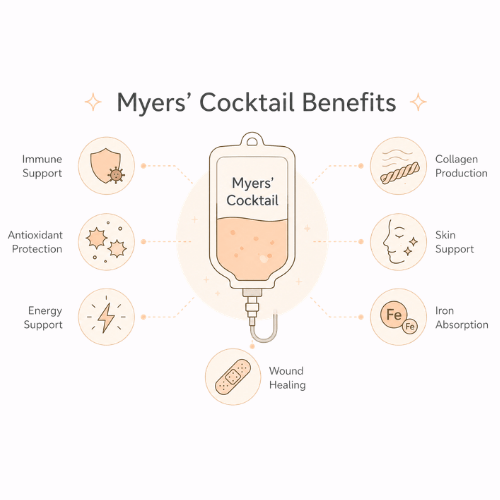
The Myers’ Cocktail is a general wellness and energy protocol. Performance IV is specifically formulated for the post-exercise physiological environment — with amino acids (glutamine, carnitine), higher antioxidant loading, and electrolyte composition calibrated to sweat losses. The goals and concentrations are distinct.
No — it does not replace or augment the training stimulus. It reduces the physiological cost of recovery, allowing more consistent training. Fitness is built through training; performance IV makes more of that training recoverable.
The components are safe. WADA limits IV infusions to under 100ml within a 12-hour period without a TUE — athletes subject to anti-doping regulations should confirm their status. True Drip’s clinical team can advise.
Glutamine and antioxidant supplementation reduces markers of muscle damage including plasma CK and LDH, and reduces inflammatory cytokines including IL-1β and TNF-α after exhaustive exercise. [2] Whether this translates to measurable DOMS reduction varies by individual and training load, but the mechanistic basis is sound.
Most athletes find monthly or post-major-training-block use sufficient. For those in competition season or training camps, weekly sessions during peak load periods are appropriate. Your clinician will advise based on training schedule and recovery goals.
Yes — glutathione and NAD+ are common additions for athletes focused on antioxidant capacity and mitochondrial efficiency. Hydration base can be adjusted for volume. Your clinician will design a combination appropriate for your specific goals and schedule.
Reduced muscle soreness within 24 hours. Better sleep quality the night after the session. A noticeable improvement in how you feel at the next training session compared to unassisted recovery over the same timeframe. Energy improvements from B vitamin restoration building over 12 to 24 hours.
If you want to know whether Performance IV Therapy fits what you’re experiencing, our clinical team is happy to walk you through it

[1] Cruzat V, et al. (2019). Glutamine as an Anti-Fatigue Amino Acid in Sports Nutrition. PMC6520936
[5] Pickering G, et al. (2021). Magnesium for Pain Treatment in 2021? State of the Art. PMC8143286
[8] McDermott BP, et al. (2012). Intravenous Fluid Use in Athletes. PMC3435915
[9] Carr AC, Maggini S. (2017). Vitamin C and Immune Function. Nutrients. PMID 29099763
Contents Home Performance IV Therapy: Benefits, Safety, and What to...
Read MoreContents Home Hydration IV Therapy: Benefits, Safety, and What to...
Read MoreContents Home Immunity IV Therapy: Benefits, Safety, and What to...
Read MoreContents Home Magnesium IV Therapy: Benefits, Safety, and What to...
Read More